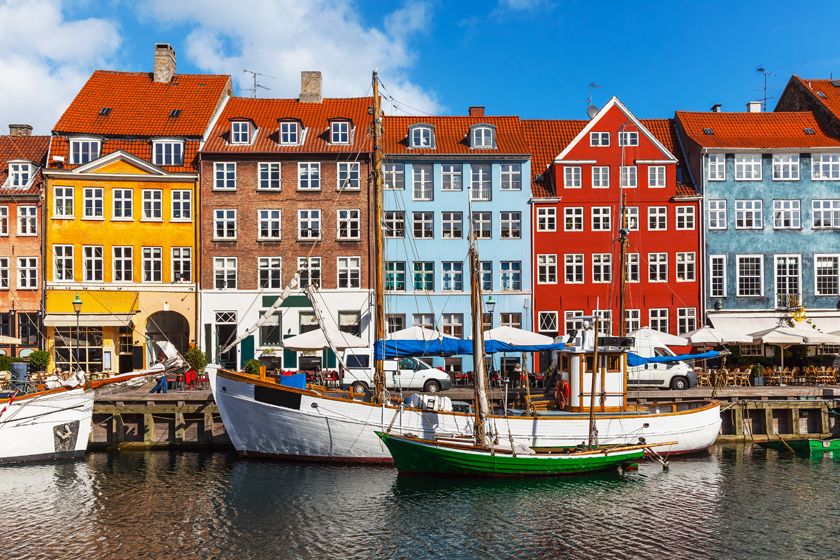
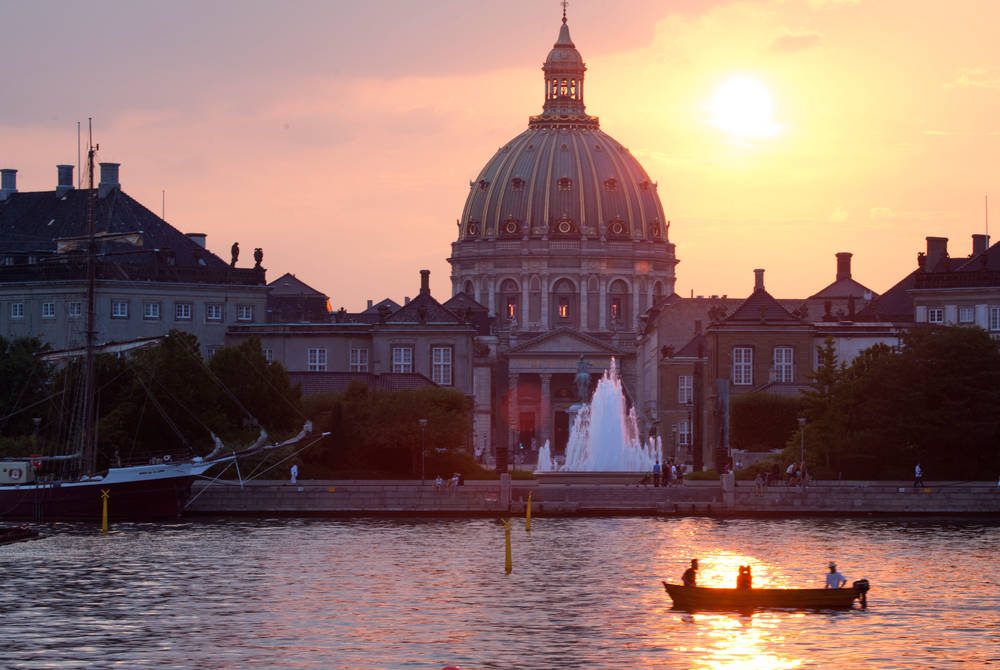
The smallest and southernmost Scandinavian country, Denmark is spread across hundreds of islands at the maritime crossroads between the North Sea and the Baltic Sea. It shares a land border with Germany to the south and a bridge connection with Sweden to the east, while to the north, regular ferries run to and from Norway. Owing to its easily navigable, well-maintained roads and extensive rail network, Denmark lends itself perfectly to being explored by car or by train. Although it can easily form part of a longer adventure alongside its Nordic neighbours, Denmark is a wonderfully versatile standalone destination, with its photogenic, bike-friendly cities, magnificent beaches, cutting-edge culinary scene and idyllic, gently rolling countryside. See itinerary ideas
Copenhagen, Zealand & beyond
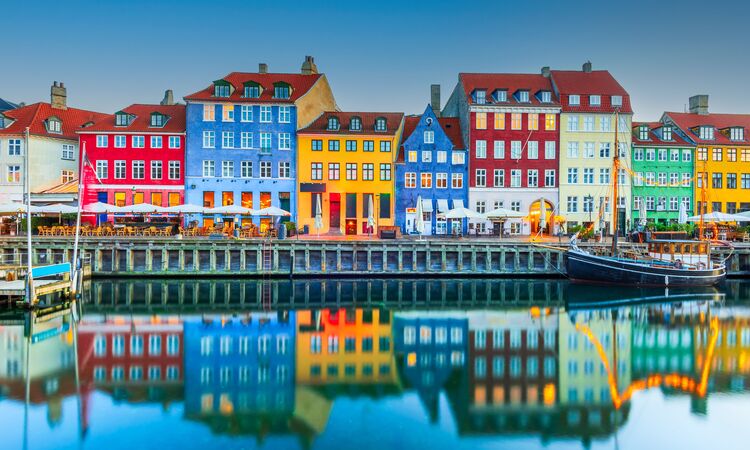
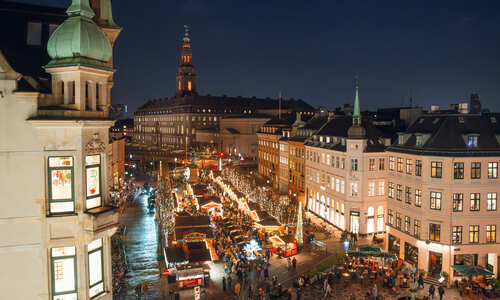
Copenhagen is, by some distance, Denmark’s most visited destination, split between the islands of Zealand and Amager. It’s one of Europe’s most alluring cities, harbouring a rich blend of world-class museums and galleries, grand castles and palaces, charming canals, and eclectic neighbourhoods brimming with cosy cafes, trendy bars and innovative restaurants. And, thanks to its excellent cycling infrastructure and ultra-efficient public transport, it’s a breeze to get around. Copenhagen also doubles up nicely with a trip across the Øresund Bridge to the Swedish city of Malmö – just 40 minutes away by train.
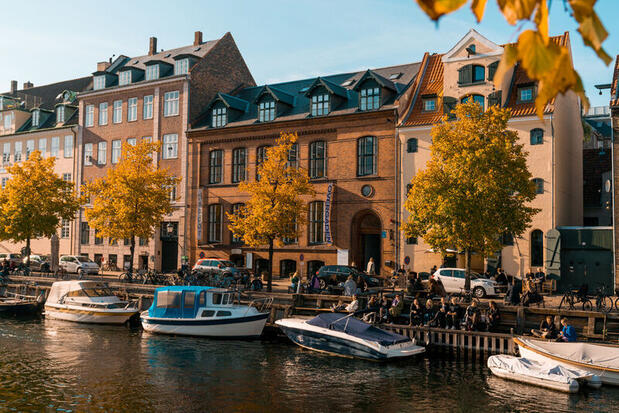
Christianshavn, Copenhagen (Credit: Daniel Rasmussen - Visit Copenhagen)
North of Copenhagen lies the Danish Riviera, a 64-kilometre stretch of coastline lined by pristine sandy beaches and historic fishing towns, including Gilleleje, Tisvildeleje and Hornbæk. Also within striking distance of the capital is Roskilde – a hilly, fjord-side city that’s home to a UNESCO-listed Gothic Cathedral and a superb Viking museum. Around a 90-minute drive south of Copenhagen, meanwhile, is the island of Møn, whose towering white chalk cliffs, ancient beech forests and distinctive, Romanesque churches make it a thoroughly worthwhile day trip destination.
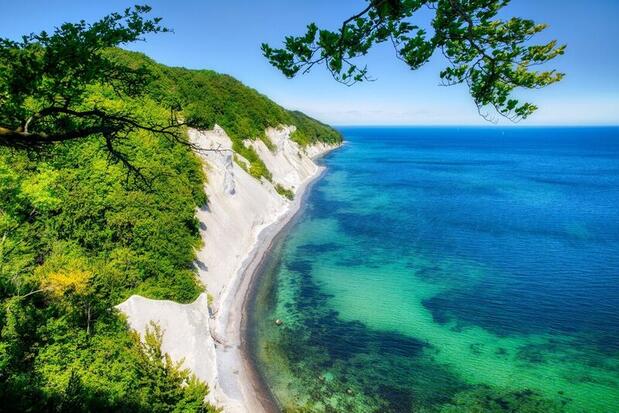
Møns Klint
Flung out in the Baltic Sea around 170 kilometres east of Zealand, closer to Sweden, Poland and Germany than the rest of Denmark, lies Bornholm, also known as the ‘Sunshine Island’ – a favourite summer escape for many Danes. It’s renowned for its dramatic granite cliffs in the north, white sand beaches in the south, vast network of cycle paths, and postcard-perfect harbour villages. Bornholm can be reached via a short domestic flight (35 minutes) from Copenhagen or by ferry (1 hour 20 minutes) from Ytsad in Sweden.
Funen & South Funen Archipelago
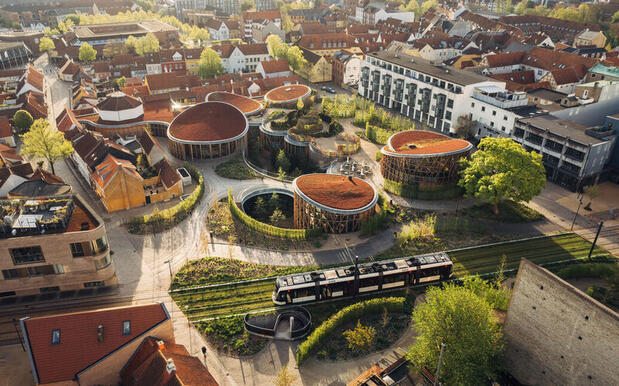
H.C. Andersen Quarter, Odense (Credit: Thomas Mørkeberg - Visit Fyn)
Funen is Denmark’s third-largest island, connected by sea bridge with Zealand (to the east) and Jutland (to the west). It’s home to Denmark’s third-largest city, Odense, birthplace of the world-renowned fairytale author, Hans Christian Andersen, whose legacy is celebrated at a beautifully designed museum that flows between indoor and outdoor spaces. In Odense’s historic centre, you’ll find charming, cobbled streets lined by colourful medieval houses, as well as the 14th-century, red-brick St. Canute’s Cathedral. Odense Harbour, once a busy industrial hub, is being transformed into a vibrant, modern district with a new cultural centre and an urban bathing and sauna complex, while nearby Storms Pakhus is a buzzing street food venue inside a former warehouse.
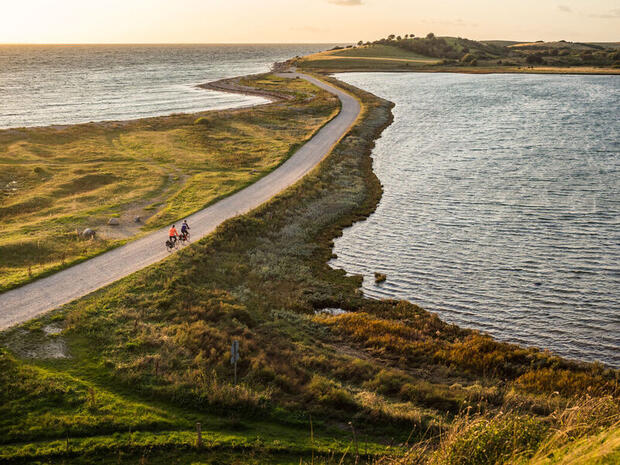
Cycling at Fyns Hoved (Credit: Visit Fyn)
Beyond Odense, Funen is known as the ‘Garden of Denmark’, owing to its lush, fertile landscapes dotted with storybook castles and grand manor houses. With over 1,200 kilometres of quiet, well-maintained cycle routes, Funen is also a popular cycling destination, particularly during the summer months. On the island’s south coast, Svendborg serves as a gateway to the tranquil islands of the South Funen Archipelago, including Tåsinge, Ærø and Drejø. Out here, life unfolds at a slower pace, and you can experience a slice of Denmark that feels like taking a trip back in time.
Jutland
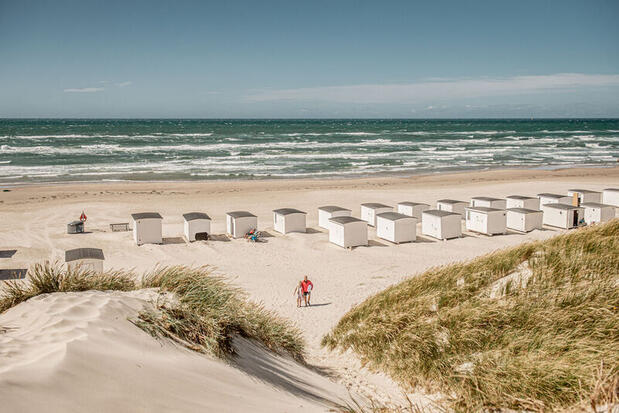
Løkken Beach (Credit: Visit Nordvestkysten)
Stretching around 350 kilometres from the German border to the sandbar of Grenen, Jutland is the only part of Denmark that’s connected to continental Europe. Technically, North Jutland is actually an island, separated from the rest of the peninsula by the Limfjord – a shallow fjord that connects the North Sea to the west with the Kattegat to the east.
North Jutland boasts some of Denmark’s wildest landscapes, particularly in and around Thy National Park – a patchwork of coastal forests, heathlands and dunes sculpted by the wind and the sea. Along the coast, you’ll find an abundance of picturesque towns fringed by wide open sandy beaches, including Klitmøller (a surfing hub, nicknamed ‘Cold Hawaii’), Løkken, Sæby and Skagen. The migrating sand dune, Råbjerg Mile, is another of the region's highlights.
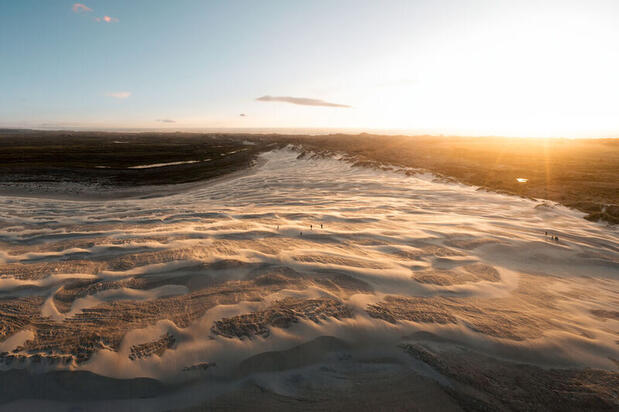
Råbjerg Mile, Denmark (Credit: Destination NORD)
In Central Jutland, Silkeborg is often described as Denmark’s ‘outdoor capital’, and serves as a gateway to the Lake District (Søhøjlandet). This delightful region of lakes, hills and forests is prime territory for hiking, cycling, kayaking and wild swimming. A little further south lies another of Jutland’s star attractions, Billund, renowned as the home of the original Legoland theme park.
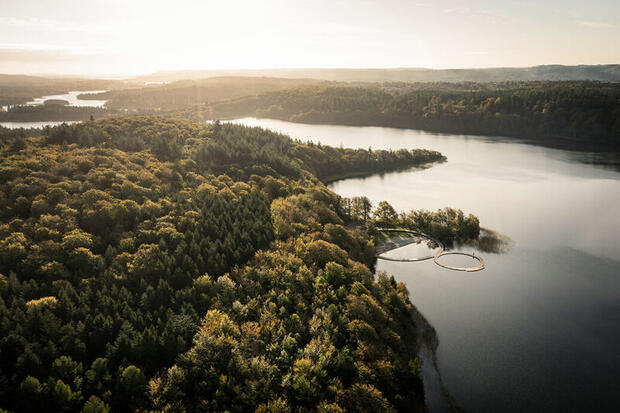
Almind Sø, Danish Lake District (Credit: Roar Paaske)
Jutland’s major cities certainly warrant exploration, too. Aarhus, Denmark’s second largest city, offers an array of fabulous museums, terrific restaurants, eye-catching modern architecture and a gorgeous, immaculately preserved Old Town (the Latin Quarter). On the southern shore of the Limfjord, Aalborg has evolved from a hub of heavy industry into a flourishing cultural hotspot with a rejuvenated waterfront, a thriving street art scene and a burgeoning gastronomic reputation.
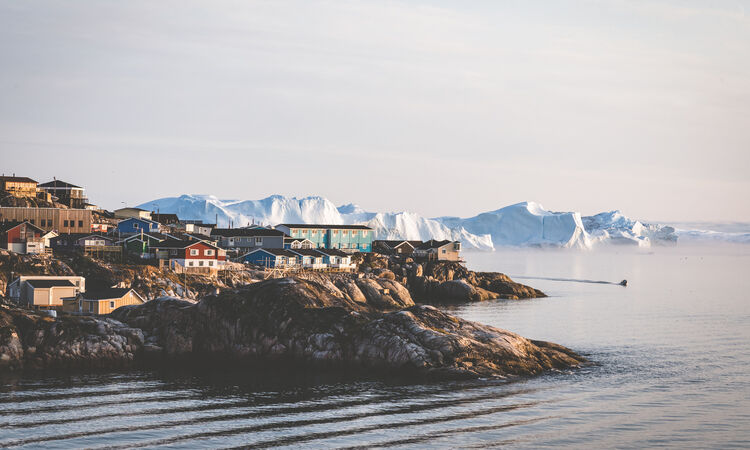
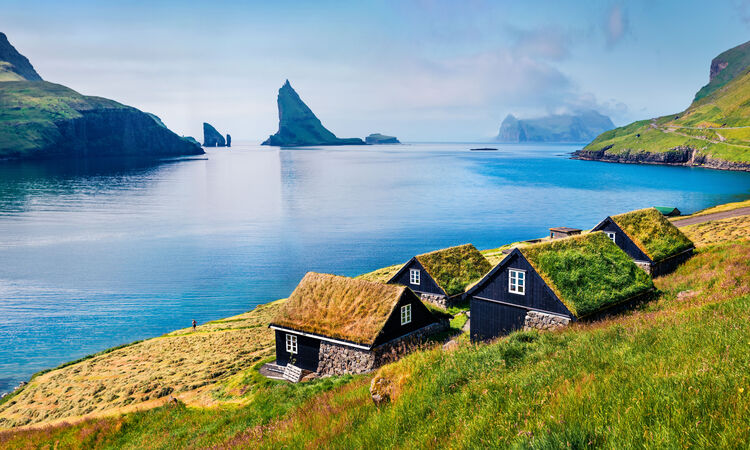
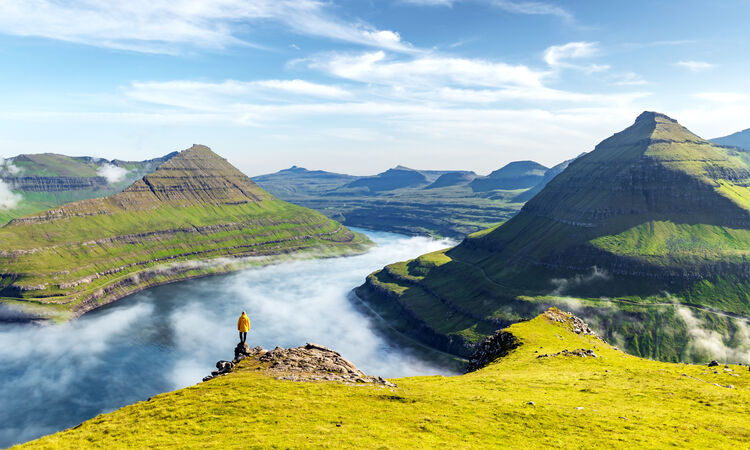
In addition to Denmark holidays, we also offer holidays to the Faroe Islands and Greenland. See further details below, or speak to one of our specialists to find out more and begin crafting your tailor-made adventure.