
Located 400km within the Arctic Circle, Alta, Norway, is a small, modern city surrounded by pristine tundra, mountains, and steep, river-carved canyons. Poised at the head of Altafjord, this off-the-beaten-track destination is renowned as one of the best places in the world to see the Northern Lights.
Despite this reputation, the city remains a largely underrated Northern Lights destination, attracting considerably fewer visitors than places like Tromsø while often enjoying more reliable weather. Aside from its mesmeric auroral displays, Alta is home to a futuristic Northern Lights Cathedral, a rich cultural heritage, and an array of winter adventures, from husky or reindeer sledding to exploring the landscape by snowshoe or snowmobile.
Without further ado, here’s our expert’s guide to Alta, Norway’s underrated Northern Lights hotspot.
What makes the Northern Lights in Alta so special?
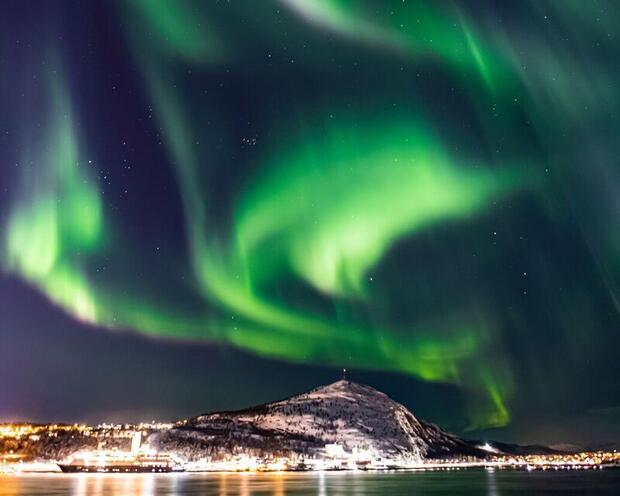
Northern Lights in Alta, Norway
Known as ‘the City of the Northern Lights’, Alta has been at the centre of modern aurora research since the late 19th century. In 1892, the first-ever photograph of the aurora borealis was taken here, then in 1899, scientists established the world’s first permanent Northern Lights observatory on nearby Haldde Mountain.
That’s no coincidence. Alta’s latitude, just shy of 70°N, places it well within the auroral oval – the geographical zone where the Northern Lights appear most frequently. Step beyond the city limits and any light pollution quickly fades, revealing dark Arctic skies over the Finnmark plateau and Altafjord – perfect conditions for watching the shimmering celestial ballet dance above your head.
Alta’s geography and the Northern Lights season
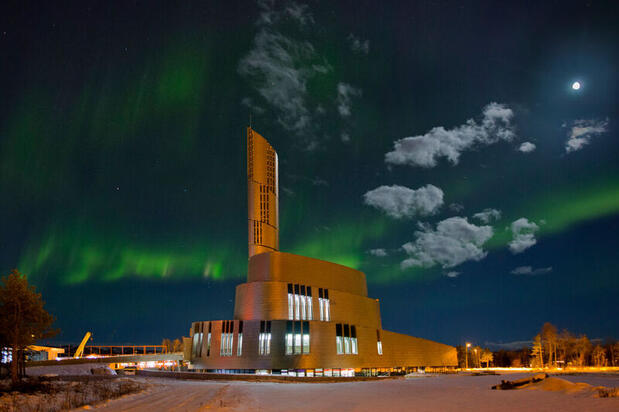
Northern Lights Cathedral, Alta (Credit: Anne Olsen Ryum - nordnorge.com)
Cradled between the Arctic coast and the Finnmark plateau, Alta’s protected position on the banks of Altafjord often results in drier, more stable weather conditions. Its unique geography makes it ideal for aurora chasers, sitting between three climatic zones – coastal, fjord and continental plateau – which rarely experience unbroken cloud cover simultaneously, thus boosting your odds of seeing the Northern Lights.
Alta’s Northern Lights season runs from late September to early April, when the nights are dark enough for the aurora to be visible. The period around both the autumn equinox (which falls between 22-24 September) and the spring equinox (between 19-21 March) are often associated with elevated solar activity and intense Northern Lights displays. From late November to mid-January, meanwhile, the sun doesn’t appear above the horizon as Alta experiences polar night. It isn’t completely pitch-black throughout this period, however, as the landscape is bathed in an eerie blue glow during the brightest part of the day.
Alta’s history, culture and Sámi heritage
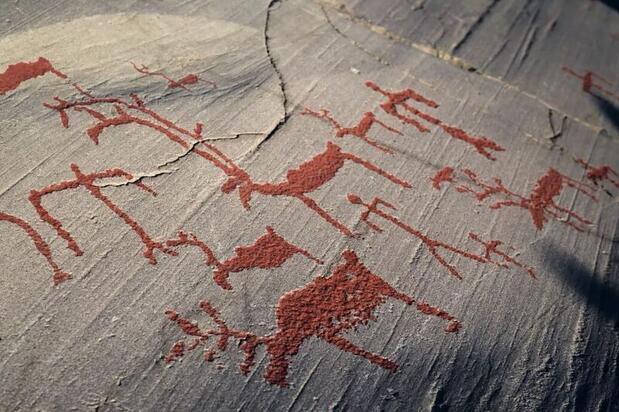
Ancient rock carvings at the Alta Museum (Credit: CH - VisitNorway.com)
Despite its remote location, human activity in Alta dates back to the Stone Age. Daily life, the natural environment and the activities of prehistoric hunter-gatherers are recorded in around 6,000 rock carvings dating back to 5000BC. These UNESCO-listed petroglyphs can be seen in the open-air Alta Museum, just outside the town.
Some of Alta’s earliest settlers were the Sámi, Europe’s northernmost indigenous people, whose seasonal movements between coast and plateau still shape the region today. Indeed, Sámi culture in Alta is thriving. Reindeer-herding families live outside the city, while colourful gákti traditional dress, joik songs and duodji handicrafts offer a glimpse into their world. Sámi language is central to local identity with the Northern Lights known in northern Sámi as guovssahas – ‘the light you can hear’ – a nod to age-old tales of aurora that crackle and pop.
Alta’s modern identity is just as striking. In the town centre, the spiralling, titanium-clad Northern Lights Cathedral, Nordlyskatedralen, echoes the movement of the aurora in its architecture. Seeing the Northern Lights here in winter, flickering behind the floodlit cathedral, is a captivating spectacle to behold.
When it comes to cuisine, Alta is just as rooted in its surroundings. Restaurants serve fresh salmon from the nearby river, reindeer and game from the plateau, and cod and halibut from the fjords, often infused with subtle Sámi culinary influences.
How to experience the Northern Lights in Alta
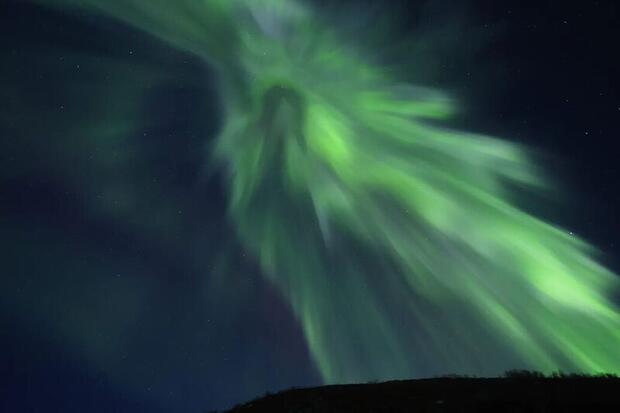
Northern Lights explosion over Alta, Norway
When it comes to seeing the Northern Lights, Alta offers a whole host of guided aurora experiences. Experienced Northern Lights hunters track forecasts and cloud cover, using their knowledge of local microclimates to maximise your chances. If you’re feeling adventurous, hop on a dog-sledding aurora tour or a snowmobile safari through snowy forests to access remote viewing spots far away from any artificial light pollution.
Photo-focused tours will help you capture the dazzling light display, while camp experiences offer cultural immersion in a traditional Sámi lavvu (tent), learning about reindeer herding while green swirls of light shapeshift overhead. Between November and January, orcas and humpback whales travel up Altafjord to feed on herring, making this a prime destination to combine aurora viewing with whale watching.
For a more indulgent approach, stay at one of the region’s standout wilderness lodges and let the lights come to you. Among these is the fabulous Arctic Wilderness Lodge and the adjacent Sorrisniva Igloo Hotel, rebuilt each winter on the banks of the Alta River, where you can drift between watching the aurora, sipping a nightcap in an ice glass, and spending the night in a room sculpted entirely from snow and ice.
Why Alta is still underrated
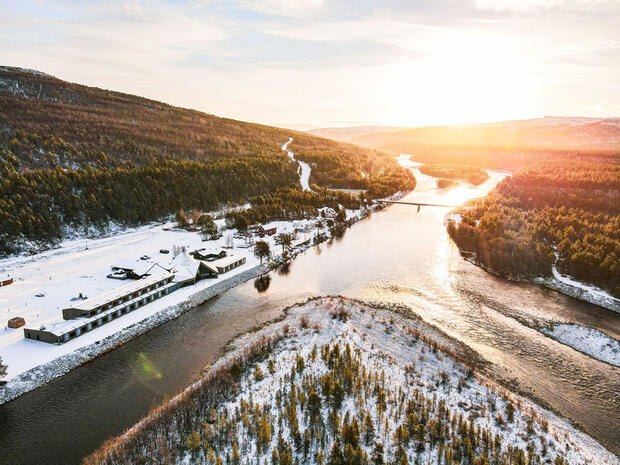
Arctic Wilderness Lodge, near Alta
For all its aurora credentials, Alta still flies under the radar compared to more popular and well-established Northern Lights destinations. Tromso, in particular, experiences a high volume of Northern Lights tourism, while Alta offers a quieter, more intimate Arctic experience, with fewer crowds and lower prices. There’s a strong sense of wilderness here, with a number of unique and authentic experiences on offer, from staying in an ice hotel or Sámi camp, to whale-watching and exploring Northern Europe’s largest collection of rock art.
Alta’s dry, inland climate and mix of fjord and plateau landscape give it a meteorological advantage, while its rich Sámi culture, longstanding aurora heritage and access to remote wilderness ensure this unassuming Arctic city delivers a memorable and authentic Northern Lights experience.
How to get to Alta
Although there are no direct flights from the UK to Alta, getting there is still very straightforward. You can either fly to Oslo and take a two-hour flight from there, or fly to Tromsø and take a short 30-minute flight. This also opens up the possibility of combining a trip to Alta with some time in either Oslo or Tromsø for a more rounded Norwegian adventure.

